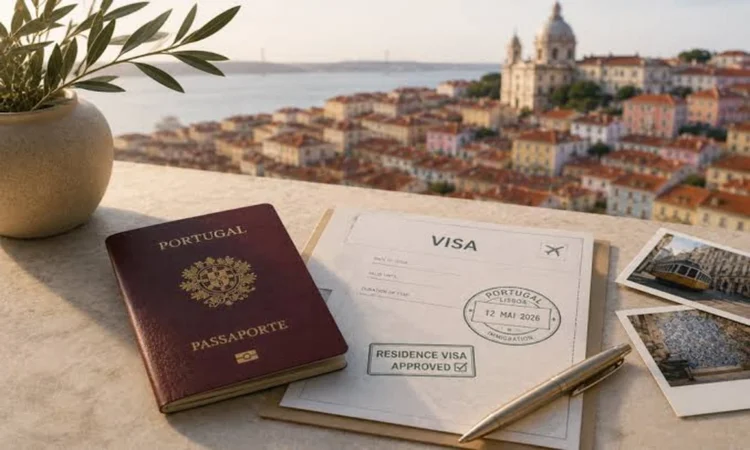
Being a Portuguese resident will give a passport and EU freedom with a powerful one. This guide on how to become a citizen of Portugal by residency goes into explaining the latest way to do it, residence conditions, and the difference between residency and citizenship. It is aimed at informing long-term planners about the present-day regulations following the changes of 2026 and answering the question how do I become a Portuguese citizen.
Understanding statutory residence timeline requirements
The foreign residents are required to legally remain on the Portuguese territory on a continued basis over certain periods of multi-years. Calculation of legal status starts on the date of your first temporary residence card on which you have the precise issue date. The following basic timetable variables regulate citizenship eligibility:
- Five-year residency rule: Temporary residence permits that are valid continuously, lasting through the period of five years, make foreigners eligible to naturalization.
- Physical presence days: Being on national borders to the minimum necessary times guarantees full adherence to legal stay requirements.
- Legal status continuity: Renewal of residence permits before the expiry companies uphold the computations of uninterrupted physical residency on citizenship.
- Card issuance starting: The counting of statutory residence periods starts immediately after the date in which initial residence cards have been printed.
Basic knowledge of Portuguese language
Citizens who want to naturalize have to demonstrate proficiency in the Portuguese language by using certified official examination or by having accepted academic qualifications. Language acquisition is the possibility to integrate foreign residents into local everyday communication and space of a cultural community. There are official ways that meet required language standards:
- Official CIPLE exam: Having passed the standardized test A2 elementary Portuguese examination, meets the minimum naturalization language proficiency.
- Certified language courses: Successful completion of certified language courses in certified public educational institutions, meets official language proof rules.
- Academic transcript proof: Leaving schools with Portuguese education will serve as a direct source of evidence to the required levels of language proficiency.
- Professional training certificates: Achievement of qualified vocational qualifications taught in Portuguese assures adequate practical language skills.
- Official language exemption: With the qualified applicants to obtain medical exemption certificates makes them relieved of the language testing requirement.
Gathering essential legal and background documentation
Organizing formal personal records involves careful gathering of documents, certified translation and authentication of apostille by law. Filing of full application files accelerates the immigration processing in government agencies. These are the basic naturalization applications:
- Clean criminal record: Certified police clearance certificates of all past countries are good evidence of good international status.
- Valid passport copy: Full color copies of travel passports will be considered to be valid and hence to make sure that personal identities are accurate.
- Birth certificate apostille: Sign legal apostille to legal birth certificate that ascertains family lineage.
- Proof of financial means: The idea of personal self-reliance is evidenced by showing adequate independent income or work contracts
- Current address proof: Providing valid lease agreements or housing utility bills is any evidence of address of physically active residence.
Navigating the formal citizenship application process
Applying to naturalize includes payment of necessary administrative fees and provision of records to civil registry offices that are centrally located. Legal processing officers look through part of the background documents, check the calculation of physical presence and issue a formal decree of registration. The operational processes regulating the end citizenship approvals include the following:
- Registry file submission: The initial process of review on application begins with submission of physical document portfolio at central civil registry departments.
- Government fee payment: Mandatory administrative processing fees are paid, which confirms submitted naturalization files as legal.
- Background verification checks: The national security agencies check the background records to verify pure public record countenances.
- Legal approval decree: The granting of official government approval decrees legitimizes ultimate naturalization position to eligible foreign candidates.
- Passport card issuance: The overall transition to naturalization is completed with an application to national identity cards and EU passports.
Conclusion
To obtain citizenship in Portugal, an individual has to undergo a period of five years of residence, some evidence of the basic knowledge of language, arrangement of certified legal documents is mandatory. By satisfying the requirements of the laws, long-term residents and international visitors are able to acquire Portuguese nationality.